
If your struggling with shin splints there are two things you need to know. The first is that you don't have to just accept the symptoms and push through them all season long. There are things you can do to help reduce pain and discomfort, especially if you address symptoms early on. The second is that you need to know what "type" of shin splint your dealing with because not all shin splint injuries are the same. The term "shin splint" can mean multiple different things. Location can tell you a lot about what type of shin splint you have. Shin splint symptoms typically occur in one of 2 places:
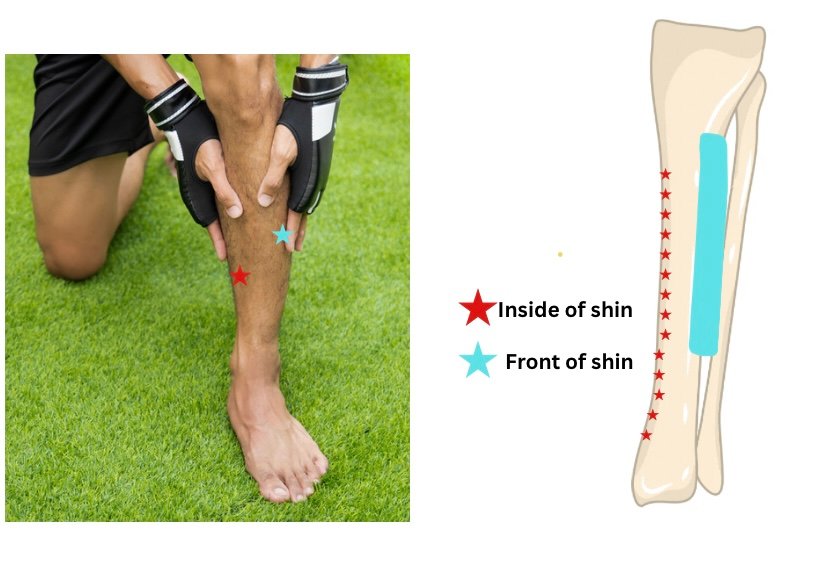
Do you treat shin splints on the inside of the shin differently from the front of the shin? There are some similarities yes, but there are also some big differences that are important to point out. Before jumping into this lets dive into the question: what causes shin splint pain? There is 3 different types of structures that can cause pain in these locations on the shin: muscle, fascia, and bone. If your symptoms are mostly spread out on the front outer part of your shin, symptoms are more likely to be from muscle and fascia irritation. If your dealing with pain on the inside of your shin, you may have more than just a fascia and muscle injury. With this injury swelling deep to the surface of the bone can also be a driver of shin splint pain, especially when symptoms are allowed to progress.
How to tell if your dealing with a soft tissue or bone injury
You don't always need an x-ray or MRI to tell if your shin splints are from a bone injury or soft tissue injury (muscle and fascia). Typically you can get good clues about this just by paying attention to the nature and location of your symptoms. Do your symptoms get better the further you get into a workout? Do they go away and then come back again towards the end of your workouts? If this is true of your symptoms then there is a good chance you may be dealing with mostly soft tissue driven symptoms. If shin splint symptoms don't show up until hours after a workout and if they linger for longer periods of time afterwards, or start showing up at rest, then you may be dealing with more of an inflammatory bony injury.
Another distinguishing feature of a bone vs. soft tissue injury is how diffuse the pain is. If the pain is really spread out, this is more likely from muscle and fascia. If the pain is pretty localized to one spot, this is more likely from bone. If bony involvement is suspected it's super important that you first make sure you aren't dealing with a high risk stress fracture. The good news about figuring this out is that its typically pretty easy to tell. A big red flag that you may have a high risk tibia stress fracture is if you have sharp pain that is very localized right at the front edge of your shin bone where there are no muscular attachments. If you have pain that is pin point to this area you should go see a sports medicine doctor, or a doctor who specializes in orthopedics to get checked out. This is a bony area that is notorious for not healing well due to poor blood supply. If not treated correctly your symptoms could lead to a more serious bony injury. The advice in this blog article is not where you should start if this describes your symptoms.
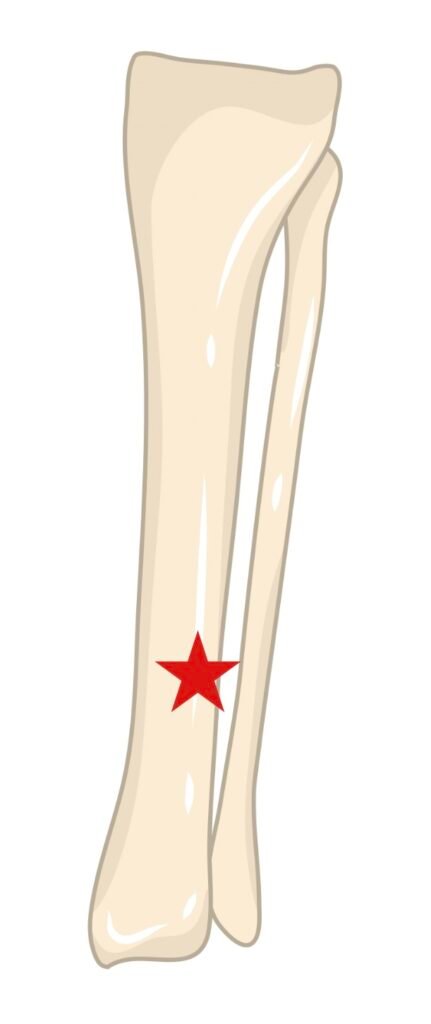
High Risk Stress Fracture Area
Pain on the inside of the shin- shin splints
Now lets talk about the first type of shin splint- pain on the inside of the shin. The medical term for this type of a shin splint is medial tibial stress syndrome (MTSS). The hallmark signs of this injury is diffuse pain that spans an area of around 5cm or more. Athletes with MTSS typically report that their symptoms eventually go away as they warm up but then can show up again towards the end of a workout. Usually symptoms are described as being dull and achy in nature. If symptoms are allowed to worsen and progress, MTSS symptoms can also show up several hours after a workout or at nighttime the day of a workout. Night time MTSS symptoms are often described as being dull, achy or throbbing. These two distinct ways that MTSS can present tells us that this injury can at times present like both a soft tissue and/or bone injury. In fact these are the two most popular theories about what drives drives symptoms with this injury. Some say MTSS is more of a bone injury, whereas others say it is more of a soft tissue injury from the shin muscles pulling repetitively at the surface of the bone. Being able to identify if your MTSS symptoms are more bony or soft tissue in nature will absolutely influence how you treat this. If bone is involved you will have to take some time off from impact activities to truly get better. The goal with rehab in MTSS is always going to be to catch symptoms early enough that bone irritation is kept to a minimum. If you can keep the shin bone happy, you're more likely to kick your symptoms much, much sooner. If not, well. . . symptoms are likely to last for much longer periods of time. MTSS symptoms unfortunately are notorious for hanging on for weeks and weeks, and often unfortunately return even after periods of rest from impact. Being diligent with rehab efforts once symptoms of MTSS first start is one of the best ways to keep this from becoming your story with this injury.
Treatment strategies for MTSS really need to be comprehensive to address all aspects of what might be driving your symptoms. Some athletes do well with starting right away with daily soft tissue work to address myofascial pain. Usually though there are other rehab strategies that need added in. These strategies include addressing:
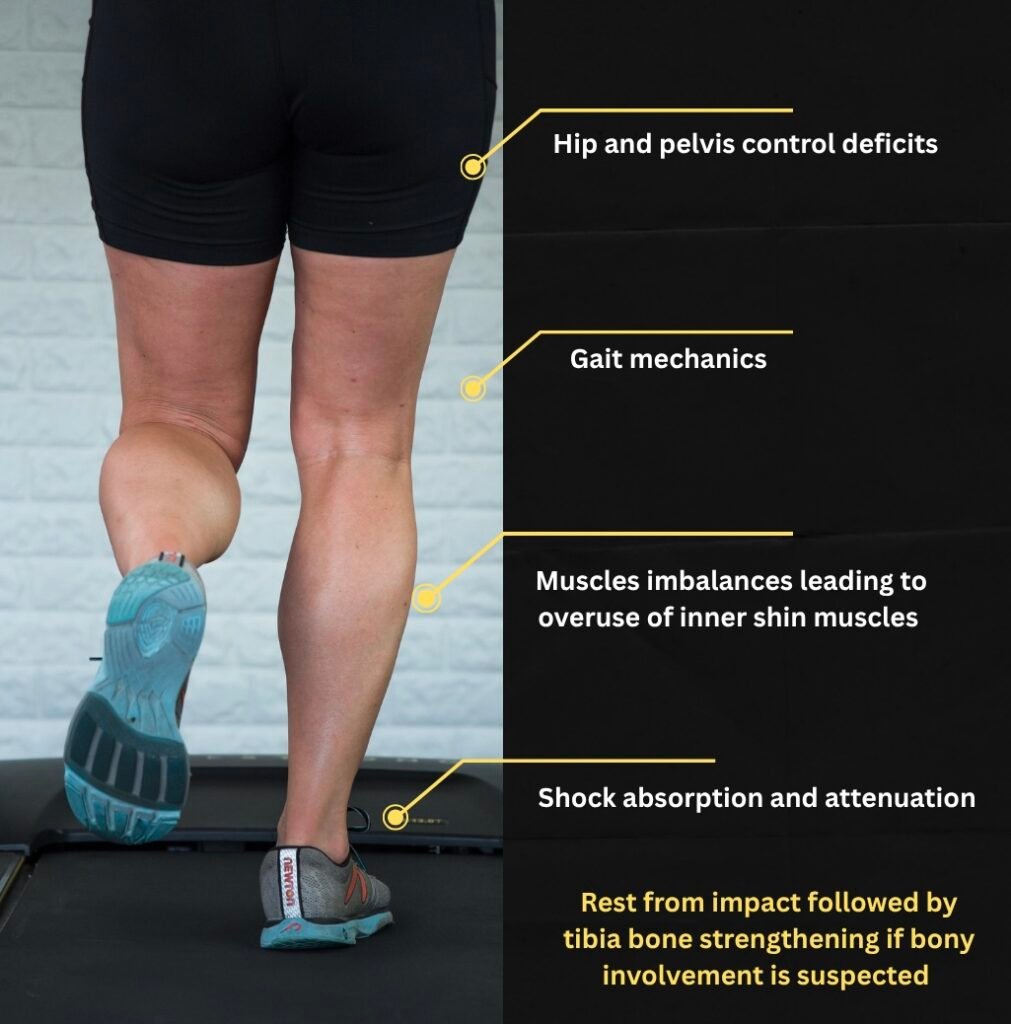
Pain on the inside of the shin- shin splints
What about the other type of shin splint?